hey everybody it's Doctor Jo, and today I'm gonna show you the top five ways to
reduce pain and swelling in the legs. so let's get started.
so before we get started, if you haven't subscribed
already, make sure and click on the button down there. and do you like my
socks? I'm going to talk about those later. so the first thing that helps
reduce pain and swelling in the legs, knees, and hips,
you know legs in general is elevation. so you want to elevate the part that is swollen.
and by elevating it, it's not just propping it up like this, you really want
it to be above your heart. so when you're elevating something make sure you lie
down. so now if it was my knee or if it was my ankle or if it was just my foot
that's swelling, it is now above my heart. so what that elevation does is it just
helps that fluid come back into my main system and work it out because a
lot of times when we have that swelling in our legs, what happens is we're up all
day, or we're up moving around, or we're even sitting and that swelling just
follows gravity and goes down into the legs because it's it just doesn't know
where else to go. so it just follows gravity and goes down, and the problem
with that is when there's a lot of swelling in that leg, that can also cause
pain as well and it can also cause circulation problems. so it's really
important to get that swelling out of those legs and so elevation is one of
the easiest ones to do. you don't have to do anything but lie there and prop it up,
but again make sure it's propped up, up above your heart. so if you're sitting in
a chair and you just have your leg propped up, I might help a little bit, but
it's not going to be as beneficial as if you're lying down and that leg is above
your heart. easy to do right? so the second one is icing, icing is really
really important with pain and swelling, and I know a lot of research is out
there that some people say don't ice, you want the swelling to happen. well in
specific injuries, sometimes you do want some swelling or inflammation because
that helps the healing process, but the problem is if you have too much
inflammation that just stays there, you're going to get a lot of scarring,
and you're going to get a lot of adhesions, which is that scar.
so then that ends up becoming a huge problem, so icing is important. you again
you might have people tell you different, but I'm telling you I strongly believe
that you should ice. so a lot of times icing in combination with elevation is
really good, so again if it's my knee, if it's my ankle, I'll go ahead and elevate
it put some ice on there, make sure that you don't do it for longer than 10 or 15
minutes, and just place it on there. don't place the ice directly on it, make sure
you have a layer of something else. some times those wraps are nice because they always
have something on it but, then just lie down again put your ice one wherever the
main swelling is, and just relax and let that 10 to 15 minutes go by. don't go any
longer than that if it's if it's actual ice, instead of like one of those ice
machines that just puts cold water around because once you go longer than
10 to 15 minutes with ice, your body goes into protection mode because it thinks
you're going into hypothermia. it actually starts warming the area back up,
so you're defeating the point. so if you're putting ice on for like thirty
minutes, you're defeating the point of doing ice. so 10 to 15 minutes at the
most. you can do that 3 to 4 times a day if you have time. you don't have to do it
with elevation, but I think it's really important to do it with elevation. so the
third thing is using compression socks or stockings, hose, pantyhose, things like
that. and the folks at jomi compression sent me their compression stockings and
they send me a whole bunch of them because they have an array of them,
different colors, different sizes, these are the surgical opaque stockings. and
the reason usually that their surgical is they have more compression. if you
ever look at compression socks if you're getting some on line, you might see 15 to
20, you might see 20 to 30, 30 to 40, the mmhg, which is millimeters of mercury,
and that just means how much pressure or compression is going on in there. a lot
of times if you see the sports running socks, like they have the cotton and
women socks here, this one is a 15 to 20, so it's nice it's not going to give you
a crazy amount of compression, but just that maybe if your legs swell after you
run or walking a little bit, that helps work it out of there.
the surgical ones I have on right now are 30 to 40, so that's a lot more
compression. like if I've had a surgery, I want a little more compression there
because I'm not able to move as much, and this is just going to help work it out.
so that's great as well, and I really like that. what's also really cool about
their stuff is they even have the thigh highs, so maybe if you have like a knee
surgery or even a hip surgery you want to take that compression a little bit
higher. so these as you can see are longer and what's really cool about that
is they have a little bit of silicone up here so that helps prevent it from
sliding back down because I've seen a lot of patients they come and they just
have you know generic pair and is slid down the knee, and then you're kind of
defeating the point of having it, so this is really nice too that you can see
right there that is going to give you some nice staying that it's not going to
slide down. they also have all of these in black, white, and beige and so you can
see here this is actually a pantyhose version that goes all the way up. so
again if you have some stuff going on your hip - or the whole leg, if you put
it get that compression all the way up to your waist with the pantyhose, then
you're gonna have a whole lot more of that pushing that swelling back out of
your body. so it's these are really nice as well, and yes men can wear pantyhose
too. and they one of the other cool things that they have is some of them
you can get without the toes. so this part would be open and a lot of people
asked, like why would I want like the toes to not be covered up. and there's a
couple of different reasons for that, but the main reason is to keep the air
flowing in there. some people that might have skin issues like a dermatitis or
something like that, if you have it closed up all the time, there's gonna get
it's gonna be worse on your skin, so a lot of times those ones that have the
little opening at the bottom just helps a little bit more air circulation in there,
but if you don't have any skin issues, I would say go ahead and get the closed
ones because that just just makes it or compression all around. but they do
have so many options that you can check out I really like them. it just feels so
good it feels like a hug to me and when I go running I actually do get a lot of
swelling in my feet when I'm running or when I'm on my feet all day, and I'm
wearing compression stockings when I take them off I have no swelling at the
end of the day. so they really do work and they're really beneficial. so if
you're interested in purchasing any of these, which they have a lot of awesome
choices, make sure and click on the link up there. so now we're going to go into
some exercises to help with the pain and swelling. and these are just really
simple things to do. most of them you can do anywhere. so number four is ankle
pumps. so again it goes back to the best way I like to do it is if you're lying
down because if you're doing ankle pumps, lying down that not only pumps
everything back into your system, but you're also elevated so it goes back
into your system as well. you don't have to do it lying down, you can do it
sitting up, you can do it in a chair, so if you're working all day, you can do
these ankle pumps as well. but I always like to make sure that the heel is free
moving. so if it's flat like this it's harder to do those ankle pumps, but if
you have it off the edge you can actually do a little more pumping. so
just pushing down as far as you can, and then coming back up as far as you can. so
it's as simple as that. ankle pumps are my favorites probably
almost any lower leg injury or swelling issue. ankle pumps are the way to start
off with and go. and you can do as many as you want. you know you can do the
traditional ten, to three sets of ten, but my thing is if you're doing these you
want to do them throughout the day especially if you have that swe- the
swelling in your legs, or pain in your legs because that calf that you're
working to pump that foot works as a natural pump to pump that fluid back out
of your legs. so that's why it's really important. it doesn't seem like it's
doing a lot but by activating that calf muscle it's pumping that fluid back into
your body so that's really really important. and then the final exercise is
going to be just a simple straight leg raise. so with the straight leg raise, all
you're doing pulling up your toes to tighten up your
leg, you want to keep your leg as straight as possible.
I like propping up my other one just because that takes pressure off of your
back and it kind of gives you a target because what you want to do is just lift
your leg to about the same level as the other side. you can go a little bit
higher, but you don't want to come up to here because then you're not really
working those muscles, and again we're working those muscles they kind of pump
that fluid out of the body. as you can see I'm also then elevating my leg as
well so this exercise is a great way to activate all those muscles to get that
fluid that pain and that swelling out of the legs and also just to help
strengthen them as well in general. so again you can just start off with ten of these
if that becomes easy, two sets of ten, three sets of ten, two sets of fifteen. if you
get to 20-25 and it's really easy, you can put a small ankle weight around your
ankle and then start doing those again. so if you're interested in purchasing
any of the jomi compression socks, make sure and click on the link up here. and
don't forget to subscribe by clicking down here. and remember be safe, have fun,
and I hope you feel better soon.


 For more infomation >> Cristina Reviews Call Me By Your Name 👨❤️👨✨| Watch & Go - Duration: 9:35.
 For more infomation >> A VIA EXPRESSA DOS MILIONÁRIOS | MJ DeMarco | Resumo Animado - Duration: 9:34.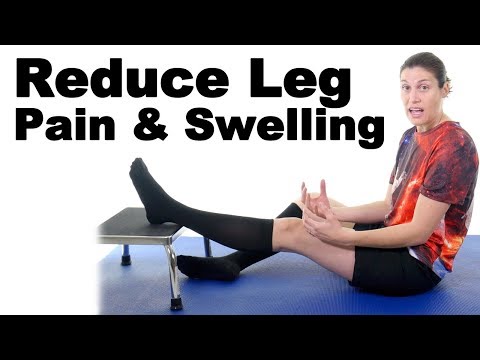
 For more infomation >> "Petty Squabbles" - Last Week in F1, 08 March 2018 - Duration: 3:19.
 For more infomation >> What Life Is Like Behind Bars for Parkland Shooting Suspect Nikolas Cruz - Duration: 1:16.
  For more infomation >> Useful Tips to Get You Through a Power Outage - Duration: 2:19.
 For more infomation >> From All Natural to Glam: Helen Mirren Shows Off Stunning Oscars Transformation - Duration: 0:32.

 For more infomation >> Jalen & Jacoby (March 07, 2018)break down the latest in sports and pop culture - Duration: 21:09.


 For more infomation >> Coma Isso Toda Manhã e a DIABETES Vai Desaparecer Do Seu Corpo ➜ DIABETES TEM CURA! - Duration: 6:10.
  For more infomation >> The Token "Fat Friend"
 For more infomation >> Témoignage n°2 : Il ne faut pas avoir honte de ce que nous sommes. - Duration: 10:29.
  For more infomation >> Des smoothies pour dépurer votre foie et vous aider à perdre du poids | Santé 24.7 - Duration: 10:04.
  For more infomation >> La face cachée du veganisme #1 : Enfant vegan, une bonne idée ? - Duration: 1:54.
 For more infomation >> Un homme guérit du cancer de la prostate et du côlon de stade 3 avec le régime crudivore - Duration: 5:17.
  For more infomation >> 8 signes avant-coureurs du cancer de l'ovaire que vous ne devriez pas ignorer | Santé 24.7 - Duration: 12:19.
  For more infomation >> Hotel Sandton Brussels Centre, Belgium (Europe). The best of Hotel Sandton Brussels Centre - Duration: 5:02.
  For more infomation >> BMW 4 Serie Gran Coupé 420i High Executive | M Sportpakket | DAB | Harman Kardon | Wifi | Comfort A - Duration: 0:54.
  For more infomation >> BMW 4 Serie Coupé 435I SPORT-AUT*!*M-PAKKET/LED/DAK/HEADUP/HARMANKARDON*!* - Duration: 0:59.

 For more infomation >> EATING ASMR | Eating Japanese sweets. This was the result | - Duration: 36:29.
 For more infomation >> Crier - English Cover [Jnyxie] - Duration: 4:33.


 For more infomation >> Día Internacional de la Mujer (International Women's Day) - I am woman (HD) (CC) - Duration: 3:07.

Không có nhận xét nào:
Đăng nhận xét