Hassan Yussuff: On behalf of our 3.3 million members across this country.
That live and work in every reaches of our country.
We would like to give you this award for your courage, for your conviction, for your tireless
efforts to ensure all children have a fair future in this country, especially First Nations children.
Dr. Blackstock: What a great honour to be here on these traditional territories.
And to be in the company of all of you.
This award is dedicated to the real heroes.
The First Nations children, the 165,000 of them that continue to experience racial discrimination
by the Canadian government that underfunds education, child welfare, health services
and basics like water on First Nations communities from coast to coast to coast.
It is those children, and their parents and grandparents, who suffered under the weight
of Canada's racial discrimination in residential schools in the Sixties Scoop.
Those are the true heroes of our country.
And same with the non-Aboriginal children, the ones who today are standing up with First Nations
children to end this racial discrimination and to free Canada from the chains of its
racial discrimination history and allow it to float up to the values of peace and respect
and honour that all of our respective ancestors, no matter where they came from, dreamed of.
You know, this is Canada's 150th birthday coming up.
It is a crossroads for the country.
It is a crossroads for the 165,000 children who are living under the weight of that discrimination.
It is also a crossroads for us in this room.
For every person resident in Canada, and the Canadian government as well.
There are two legacies we could leave.
The one we are living right now.
And the one that we would want our own children to grow up in.
So let's start about the legacy that First Nations children are being left right now.
Canada is viewed as a human rights nation.
A compassionate country that welcomes people in distress from around the world.
That helps their neighbour at times of fire and flood.
And all of that is true.
But what is equally true, is that the Canadian government, since Confederation, has discriminated
against First Nations children by separating them from their families.
By giving them less opportunities to go to schools till they can achieve their dreams,
and not getting basics like health care.
Some of us look back at residential schools and we think, oh gosh I'm so glad that's over with.
And we should all be relieved that the doors are shut.
But the legacy lingers on.
This week, I was working with a mother in Manitoba who was denied by the government of
Canada enough catheter tubes for her critically ill child so she didn't have to rewash them.
She was having to rewash catheter tubes in one of the richest countries in the world,
because government policy said her daughter only deserves so many.
The little girl was getting urinary tract infections and scarring to her kidneys.
Yesterday, I was in federal court.
A teenager required $6,000 of orthodontic treatment so she could eat and talk
without chronic pain.
The government refused, saying they would fund surgery that would require the removal
of a portion of her hip bone and inserting that in her jaw instead.
The mother brought a legal action against the Canadian government.
They have spent $32,000 fighting this teenager in legal fees.
And you and I are paying for that.
You and I are paying for that.
Over this last couple weeks, two First Nations girls removed from their families in
Northern Ontario died in foster care.
One by suicide and another in a fire in a foster home.
All of these things are tied together by Canada's racial discrimination.
A non-Aboriginal girl once said to me that discrimination is when the government doesn't
think you're worth the money.
I want you to think about what it would feel like to be in this country
if you weren't worth the money.
Or more importantly that your children are not worth the money.
Not because of anything they've done, but because of who they are,
something you cannot change.
And, you're not worth the money, and a caring citizenry who doesn't know any better, often
judges you as if you're getting more.
As if you're getting more.
The narrative in Canada is not that First Nations children are being discriminated against,
too often it is that the government is being too generous with First Nations people, and
First Nations don't know how to manage their money.
All right? That is structural discrimination.
That's the poison of it.
And while it's true that there may be some First Nations people who cannot manage their money...
I live in Ottawa.
We are not alone.
The government also invites us to believe that if it's too complex to end racial
discrimination against First Nations in this country – they live in far flung places.
But do you ever notice that the government only talks about remoteness when they're talking about people?
They never say that bit of uranium is too remote for us to be able to get at.
We had a guy in space with a Twitter feed and a guitar.
No problem.
And they say about not getting clean water, one in six First Nations children can't even
turn on the tap in this country and get clean water.
And the Government of Canada says it's too complex, but they can send a DART team halfway
around the world to get clean water pumping in 24 hours.
So why can't they do it two hours outside of Toronto?
Right?
These are the myths we need to peel away from our blindness.
Gord Downie told us, we have been trained to look away and that's why we have not seen
our Mississippi in our midst.
The Canadian government choosing to racially discriminate and it takes those forms.
That we don't know how to spend our money.
That they're already being so generous to us and that it's too complex and let's face
it, ladies and gentlemen, they treat every other child in this country equitably.
It shouldn't be so hard to treat First Nations children equitably, should it?
They already figured it out for everybody else.
And then there's the toxic potion that I fear that sometimes we've drunk too.
I call it incremental equality.
It's when there's so many dramatic inequalities across every area of your experience.
And then a new government gets in and they say we're going to take historic first steps
at remedying some of this inequality.
And you feel like you have to feel grateful for it.
But you're still being discriminated against.
Your kids are still being discriminated against.
So you push forward.
You try to reach out to the hearts of these Canadians and say "it's not that we're not
grateful it's just that we want our kids to live free of discrimination just like yours"
And no. No one, no child in this country should ever be thankful for being racially discriminated against.
No child.
Not one of them.
We're better than that.
But what they do is they just put a teaspoon at a time of equality towards First Nations people.
But do you ever notice that they never set an end date when this racial discrimination
is going to stop?
And do you ever realize that we don't look backwards?
The government says we have to launch a commission, launch an inquiry in order to find answers.
Well the first whistleblower that raised the inequalities that First Nations children suffer,
and our links to the deaths of children, was 110 years ago.
110 years ago.
I think we have been patient enough.
It shouldn't take that long to do right by kids.
And who was this great man?
Well you saw part of his legacy in that video.
His name was Peter Henderson Bryce.
He was Canada's first health officer.
He became a civil servant inside of the government.
He blew the whistle on the preventable causes of death of children in residential schools
who were dying at a rate of 25 % a year.
In one school, for every four children that walked in, only one walked out alive.
And he said medical science knows just what to do.
Don't put sick kids in with healthy kids.
Make sure they have a proper diet, don't exhaust them into servitude.
And by gosh, "Why is the Canadian government spending more money on tuberculosis treatment
just to the people in Ottawa than it is to all First Nations across the country?" he asked.
You know? That was 110 years ago.
Canada said, we won't, we can't afford the ten to fifteen thousand dollars to save those kids' lives.
He kept fighting.
He was persecuted for it, but he kept on fighting because he knew what I'm hoping that all Canadians
in this room know, is that First Nations children are worth the money.
They're worth the money!
I don't want to get on the phone anymore with moms who have to rewash catheter tubes
for their critically ill kids in this country.
You know I relate a lot to Dr. Bryce because I think that the same thing is happening today.
Is, we allow this racial discrimination to happen, all of us do.
Because we have not risen up as people of the period and told the Canadian government:
no more.
No more.
On January 26th of last year, I thought it was over.
Hearing horror stories.
When a Canadian Human Rights Tribunal found that Canada is racially discriminating against
these 165,000 children and ordered it to stop.
Canada came out and welcomed the decision. It used symbols.
They said nice words and then it didn't comply.
The Canadian Human Rights Tribunal has issued two orders of noncompliance against the Canadian
government this past year and another order is pending.
It's not enough to smile and discriminate.
It hurts as much as when you scowl.
It needs to stop, because children only get one childhood.
They only get one childhood.
I could go into the economic arguments of why it makes sense to
treat children fairly but we already know that, don't we?
For every dollar that you spend on a child, you save 20 downstream on prisons and
those kinds of programs.
It's not about logic.
It's about deciding that the country is better than racial discrimination.
And that brings me to the country that I want First Nations children to grow up in,
that I want your children to grow up in.
A country where First Nations children never have to recover from their childhoods and
a country where no non-Aboriginal child ever has to say they're sorry.
In that country, I want them to be able to think about the past and see all of us in
this room, in the labour movement, and in our families, and in our communities, and
that we are out there demanding that the government stop its racial discrimination, and that we
keep talking and we keep sending messages to these kids that we love you
and you're worth the money.
That's the legacy I want them to see, that's a country I want your kids to grow up in.
In this world of intolerance, we've got to stand up for each other.
We can't leave anyone behind, and we, God forsaken, we can't leave our kids behind.
We can't do that.
You know, a lot of people when they think about that image of us finally getting to
that marker where Canada's racial discrimination against First Nations children is over with,
they see us almost as freeing the chains away from the potential of the children, that we
take away the chains that have bound them for centuries.
That we finally are able to think about the children who died in residential schools and
the ones who were there, and said, not only are we sorry but we learned something from that.
And we're never going to let your grandchildren go through what you went through.
But there's something else that's really important too.
As we unchain these children from the unfairness of structural and racial discrimination by
the Canadian state, we are freeing ourselves.
In fact, they are freeing us.
In fact, we come to know what we should have always seen.
Is that through all of these years, First Nations children have loved all of you enough
to believe that you would do the right thing.
That you are good people.
That you won't stand for it anymore.
And one day, you will do what's needed so that this country rises up.
You see, they are going to free you from the caps and the prisons we built around us that
say that we can't end this racial discrimination or it's going to take 50 or 60 years to do it.
I might just be one girl with a bunny. But I think we can do it today.
I think we can do it today.
But don't turn the page on these kids.
It's easy to get wrapped up in other things.
You must every day wake up and think who is it that I can talk to today to make this racial discrimination end?
And in this room there's enormous power.
There's enormous power of your hearts as people who love children, you have your own children.
And then there's the power of the labour movement itself, for which I am forever grateful.
You in small ways and in big ways can change this discrimination by calling on the Prime Minister
to make sure that this is the last Prime Minister who's in charge of a racial
discriminatory measure, that he complies with the Canadian Human Rights Tribunal and ends
racial discrimination for every kid in this country, and that we finally have an honouring
of the residential school survivors that puts their legacy at rest.
You see the top call to action for the Truth and Reconciliation Commission is making sure
this generation of kids have a proper childhood.
And I believe that every single one of you can make that happen.
Some of you are already doing it.
But for the rest of you, I ask you this.
I want you to think about the 165,000 kids.
Think about them as if they're your kids.
And the next thing you do, I want you to show them that they're worth the money.
That you love them enough to stand up for them.
Because I know you do.
Thank you very much.
Hassan Yussuff: Cindy, on behalf of our Congress, we are with you.
We have written to the Prime Minister previously of course on the Human Rights Commission ruling.
We will write to him again as this convention, of course, isn't in sitting, to remind him
that Canada has yet to meet its obligation as the Human Rights Commission has instructed.
I also want you to know.
That we will be there with you until you finally win this victory.
And more importantly, we're also going to make a small contribution to your foundation
for the work you continue to do on behalf of these kids.
Thank you so much for coming here today.
 For more infomation >> Harvey Relief Funding Easily Passes In House, Heads To Senate | MSNBC - Duration: 2:43.
 For more infomation >> こうやって売れる「日本語」 - Duration: 0:42.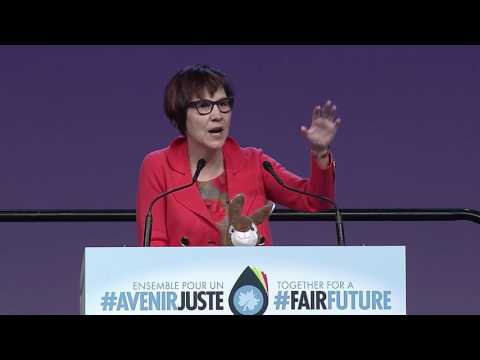
 For more infomation >> WHO WERE THE KABBALISTS? - Duration: 23:18.
  For more infomation >> Jaguar I-PACE Concept | Design del suono - Duration: 1:52.
 For more infomation >> шейх Солих аль Фавзан - такфир мушриков дело каждого - Duration: 0:55.


 For more infomation >> Futura Quartet 4in1 Embroidery and Sewing Machine - Duration: 23:36.
  For more infomation >> ƓAƝƵÚA - MC ANI (VIÐΣOCLIP OFICIAL) - Duration: 3:55.
  For more infomation >> Suzuki Wagon R+ 1.3 Season - Duration: 0:59.
  For more infomation >> Volkswagen Polo 1.2 TDI 2012 Navigatie - Duration: 1:01.
  For more infomation >> Volkswagen Polo 1.4 TDI BLM Nw. model met Navigatie Specialist VW Polo - Duration: 1:01.
  For more infomation >> Brewery Vivant Wood-Aged Beer Fest - Duration: 5:46.
  For more infomation >> Ghosted - New Comedy Seri...
 For more infomation >> Mercedes-Benz C-Klasse Estate C 350 E LEASE EDITION 7% Bijtelling Navi Leer LED Achteruitrijcamera N - Duration: 0:54.
  For more infomation >> KAPEKA FDK UIN SUSKA RIAU 2017 - SULAWESI UTARA (24) - " KARNA AKU PEDULI " - Duration: 4:46.
  For more infomation >> Fiat Punto Evo 1.3 M-Jet Dynamic - Duration: 0:41.
 For more infomation >> Grocery shopping on the Citadel for Gardner - Normandy Special Ingredients - Mass Effect 2 live - Duration: 2:50:33.

 For more infomation >> KILL ME. - Duration: 2:32.
 For more infomation >> How to Get Chat Heads in Whats App 😍//2017 - Duration: 1:19.
  For more infomation >> Very Cute Cockatiel Singing - Duration: 1:31.
Không có nhận xét nào:
Đăng nhận xét