Hi everyone, as Ruth just said I'm Amy Hanes.
I'm the Cancer Systems Innovation manager
for Illawarra Shoalhaven Local Health District.
Before I start, I want to acknowledge the traditional
owners of the land that we are meeting on
and pay my respects to the elders past
and present and future.
I'm going to talk about a recent project
the Illawarra Shoalhaven Colorectal Cancer MDT
or Multiple Disciplinary team,
has undertaken and that is the implementation
of comprehensive outcomes measurement
for rectal cancer patients.
This project has come off the back of a number or years work
by this very engaged group of clinicians.
Our project has been to implement
the international consortium for health outcomes measurement
or ICHOM, standard outcomes set for colorectal cancer.
And for those who are not aware ICHOM
is one of the key international proponents
of belly-based healthcare, and they produce
these standard outcome sets, which are arrived
at through consultation with clinicians across the world
and importantly with patients as well.
As you can see, the largest group of outcome measures
there in the slide is actually the patient reported group.
But I'll come back to those in a moment,
and also to say that we got a cancer institute grant
to implement this project which is very very helpful.
So the ability to collect quality data
was an important pre-requisite to this project.
Over the last few years we built data collection capability
into all of our cancer MDT processes.
Through online referral,
through the use of live mosaic,
that's our oncology information system, MDT documentation.
And for rectal cancer, we've had a passionate
radiation oncologist, Dr. Sharlene Caine, who's done
and incredible amount of work to complete a set
of rectal cancer for all Illawarra Shoalhaven patients
diagnosed between 2006 and 2017,
so 12 years worth.
All diagnosis, treatment and follow-up data,
it is an incredible resource.
And the final building block for collecting
the ICHOM measures, was to implement prospectic collection
of the patient reporting measures,
which of course is where most of the work has been.
The other pre-requisite to collecting outcomes data
is a structured follow-up process
that you can tie your measures collection into.
And the first thing the MDT did in this project
was to agree on an evidence based
standardized follow-up process.
And this is the follow-up protocol for early stage
colon and rectal patients.
So, as you can see, the clinical follow-up
is at the top, along the top line,
represented on a timeline up to five years,
and down the bottom you can see we've tied
the outcome measures collection
into that clinical follow-up.
So when a stage one or two rectal cancer patient
comes to see their surgeon at one year mark,
the surgeon knows he or she has to do
a colonoscopy, a CT, a CEA, and collect the patient
reported and survival and disease control measures.
So, I want to tell you a little bit more about the measures
we've been collecting before I dive into the results.
First up, the survival and disease control measures,
they are things like overall survival,
recurrence-free survival as well as important
prognostic factors like tumor aggression score
and modern status at surgery.
We're collecting a majority of these measures
through MDT data collection.
We are also collecting measures about the short term
complications of surgery, radiotherapy, and chemotherapy.
And these measures are collected directly from clinicians
via surveys at the six week mark post-treatment.
For the patient reported measures,
we're using two EORTC quality of life surveys.
The general C-30 and colorectal specific CR-29.
Clinicians get their patients to complete these
at routine appointments as per the follow-up protocol
I talked about earlier.
And we are also collecting a baseline comorbidity measure.
This isn't part of the ICHOM standard set
but we're interested to see how the comorbidities
effect our outcomes in the longer term.
And in general, in our MDT's across our district,
we've been having some discussions about how we better take
comorbidities into account when making clinical decisions
so that this ties in with that as well.
And we're collecting all of these measures
for all rectal cancer patients new and existing,
in our region in the public and private sector,
and we have all of the relevant clinicians involved.
Now to talk about the reason we're
collecting the outcome measures.
As for some of the hard questions,
How effective is our care?
How likely is it that our patients disease will recur?
How much variation is there within our
teams and across our District?
How does our care compare to other services
in New South Wales, Australia, and overseas?
And how will the care we give
impact on our patients lives into the future?
Sorry.
In terms of results,
beg your pardon that, there are two slides in there
I didn't realize were in there.
In terms of results the first thing I want to highlight
is that this work and the data we've collected,
has given the MDT a much better understanding
of the cohort of patients in our region that it cares for.
That understanding is I think an important part
of the notion that the Cancer Institute describes
as oversight of a group of patients by an MDT.
For example, one important thing we have learned
is that our rectal cancer population
is significantly older than populations cited
in the literature and about 10 years older
than key clinical trials populations.
And this is important when you start
to benchmark your outcomes against other services.
We know also that our most common stage at diagnosis
by quite a long way is stage three.
As I mentioned earlier, we have a complete set of data
for 644 patients with a median
follow-up period of 4.2 years.
This means we know how well our patients do.
We're still in the process of analyzing our data,
but we have presented the data a couple of times
recently to the MDT and clinicians
are uniformly captivated by it.
I remember the first time Dr. Caine presented
our survival curves to the colo-rectal MDT,
you could have heard a pin drop.
These are our recurrence rates
for stage one to three curative patients.
But in order to evaluate your own performance
you have to know how well others are doing.
To our knowledge there is no other cancer service
in New South Wales or Australia who has published
their survival and disease control data
for rectal cancer, but in an international
context our local recurrence rates are comparable.
And the studies in blue here are very
big studies and probably offer
the best benchmarking opportunity we think.
And this is our distant recurrence rate as compared
to published rates internationally.
But it's not only the outcomes data itself
that is powerful, the process of evaluating
our outcomes has brought about a focus on all
aspects of rectal cancer care.
One example of this is the streamlining
of colon and rectal follow-up,
another example is that several of our
clinicians have become expert in cutting edge
thinking in rectal cancer management.
They've been to specialist courses run
at world leading centers
with world leading clinicians.
This project has also led us to improve
rectal cancer diagnosis in our region.
As a project steering committee,
we wrote to all of the imaging providers
public and private in the Illawarra Shoalhaven to request
that they adopted a standard synoptic reporting style
for rectal MRI and to ensure that important prognostic
features were highlighted.
We also provided them with guidelines and a reporting
template from the Society of Abdominal Radiology.
And we did a similar thing for standardized
reporting of Histopathology, and also supported
the MDT's pathologist to advocate
for the routine use of additional stains
in evaluating rectal cancer.
I want to talk for a moment about the power of outcomes data
to translate to improvement in care.
Of course know that we know our district rates
of any of the survival and disease control measures
we can also separate out our individual
clinicians, our treatment centers,
and our patients places of residence.
This is an enormously powerful tool for improvement.
I'll put up a dummy graph there,
obviously we do know our real local recurrence rates
for our surgeons but I've put up
the dummy graph because in our district
we are only at the beginning of this process
of using our data in this way and as we talked
about at the workshop yesterday
governance around this very sensitive data
is extremely important and we want to get that right.
The graph on its own though is not that remarkable.
After all, local recurrence is only a small
part of the current total recurrence future.
But what we're finding is that all the different elements
we measure fit together like a puzzle.
And as we analyze our data the picture
of what's really happening is becoming clearer,
and we wouldn't have known any of it if we hadn't been
measuring out outcomes.
But measuring outcomes is not enough,
our next challenge is to facilitate
the regular use of this data by our clinicians
and leaders in our health service.
We are currently working on a reporting
framework that reflects the key elements
of rectal cancer care.
When you have so much data there's a danger
you can drown in it,
so what we are trying to do with the framework
is only reflect those factors that have a really
significant impact on rectal cancer outcomes.
And this is just a small excerpt from the framework
the colo-rectal specific quality of life measures.
We are also working on the governance
around our data, it is important we have a structured
approach of what we release and to whom,
and how we use our data within our district's
clinical governance structures.
We're also building the Cancer Institute's reporting
for better cancer outcomes measures into the framework
and this work has also lead to another,
a number of further studies using our retrospective data,
but also in the genetics of rectal cancer.
And lastly I want to pay tribute
to our Steering Committee and leave
you with a quote from one of our
colo-rectal surgeons Dr. Soni Putnis,
who in one of our earliest Steering Committee meetings
declared this is not a study,
it's part of everyday practice.
It's what we should all be doing as part of normal care.
Thank you.
(applauding)
- Thanks Amy we have still got time.
Kick off a few questions.
- [Woman In Crowd] Hello, my name is Jan Mumford.
I am the chair of the Consumer Advisory Panel
for AGITG, which is the clinical gastrointestinal
trials group.
I think of Shoalhaven Illawarra
as being a retirement area,
so maybe the over 70 figure didn't surprise me too much
but what about people under 50,
was there any young or younger (mumbles).
- Actually there were relatively few patients under 50
only from memory three or 4%, relatively few.
This is for rectal cancer only though,
our data is for rectal cancer not for colo-rectal, but yeah.
- [Woman In Crowd] Hello I am Feherty Hernan,
I am interested to know whether
you have got a similar program running
across all of your tumor streams in Illawarra?
- Oh if only (laughing).
As you would know, and I touched on it briefly
there when I talked about Dr. Sharlene Caine
who's been really the data custodian for this rectal cancer
data she has got a passion for it
and the significant investment of her time
has been fundamental to being able to measure
these kinds of outcomes.
But having said that, I think something like this is
very key in demonstrating to people
the importance of measuring outcomes
and actually what we're trying to do through this
project is put all of the processes we have
in place in terms of, you notice,
you would have noticed I said a lot of the collection was
actually three clinicians themselves.
We're not having everybody else in the team do that work
for them, so the clinicians are really bought
into the process they want to know the outcome.
So a lot of the collecting the follow-up
data for patients in that five year follow-up period
is just through routine appointments with clinicians,
and if those collections are done at that time
then we will have the follow up data
for patients who are on this study in the future.
But yes it is a significant investment.
- [Woman In Crowd] Thank you for your presentation.
I just wanted to know how are you actually feeding back
this information to the clinicians,
and secondly, how has it actually been received
by the surgeons?
- Thanks for the question, as I mentioned
we've presented it back to the people in the context
of the colo-rectal MDT,
so that group of clinicians.
Obviously not the local recurrence rates
and any performance type indicators
by clinicians themselves,
because that data belongs to that person
and we haven't actually fed that back
to them yet either yet.
We have a steering group and I think
we're really at that point where we've just got
a hold of all of this data and we have just done
the analysis in the last few months.
So as a steering group we are really mindful
of the governance around that and tying that into
the district's clinical governance structure as well.
So, that's a work in progress but we've shown them
the survival curves and all that sort of thing,
but that's why we are developing the framework as well.
We really think it's important to have a structure around
that so that framework will determine
when different things are reported back
through and through which means as well.
Yeah.
Anything else.
(applauding) - Alright, thank you.
 For more infomation >> Chris Cuomo: Is rally best use of Trump's time in this crisis? - Duration: 2:43.
  For more infomation >> Raymond Arroyo addresses his fall on 'The Ingraham Angle' - Duration: 2:42.
  For more infomation >> Candace Owens on CNN's smearing of Kanye - Duration: 4:36.
 For more infomation >> Rep. McCarthy talks bill that would fund Trump's border wall - Duration: 4:56.

 For more infomation >> Nightly News Broadcast (Full) - October 10, 2018 | NBC Nightly News - Duration: 21:07.

 For more infomation >> Calabasas Burglary Spree Suspect Arrested, Possibly Linked To Park Shootings - Duration: 2:31.
 For more infomation >> Hurricane Michael now in Georgia - Duration: 1:08.
  For more infomation >> 11pm Weather Update Hurricane Michael - Duration: 7:07.
  For more infomation >> Limo Company Operator Charged Following Deadly Wreck - Duration: 0:45.
  For more infomation >> Damage From Hurricane Michael Evident Across Northern Florida - Duration: 2:10.
  For more infomation >> Hurricane Michael Batters Florida Panhandle - Duration: 3:37.
 For more infomation >> Assassin's Creed Odyssey - Best Moments of #AskaSpartan - Duration: 4:15.
 For more infomation >> パイオニア、業務用「B.PROカーナビ」新モデル発売へ オーバーレイ表示機能を搭載 - Duration: 3:11.
  For more infomation >> War Thunder gameplay en español. # Partidas TERRESTRES REALISTA. =AMM0= escuadron. - Duration: 3:34:11.
  For more infomation >> 張國立的腕兒有多大?網友:隱形"大佬",可以罩住整個娛樂圈! - Duration: 3:14.
  For more infomation >> 孙俪"亚洲蹲"火了,引来国外争相模仿,网友没点功底做不来 - Duration: 3:32.
  For more infomation >> 馬思純新劇收視率撲街,影后地位不保? - Duration: 1:21.
 For more infomation >> 楊紫深夜2點更新微博,短短2分鐘評論過萬,網友沒睡的驚喜! - Duration: 6:35.
 For more infomation >> CBUFT 6pm News, September 28, 2006 - Duration: 30:04.
  For more infomation >> 14 Romantic Love Quotes and Messages
 For more infomation >> Video Just Surfaced Of A Republican Candidate Asking For Special Treatment During DUI Stop - Duration: 2:36.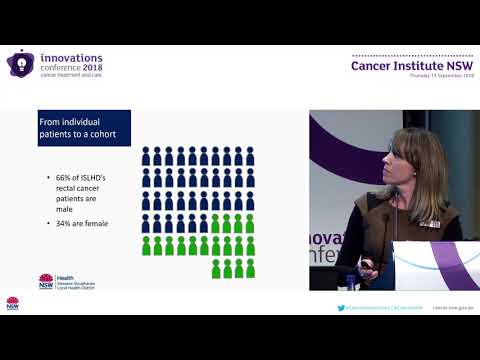
 For more infomation >> 趙本山捐款100萬,成龍捐款1000萬,而他卻捐1分錢?網友:太憤怒 - Duration: 5:32.
  For more infomation >> 12 kiểu tóc buộc xinh xắn nhất quả đất nhưng hoàn toàn dễ làm dành riêng cho bạn gái bận rộn - Duration: 1:43.
Không có nhận xét nào:
Đăng nhận xét