Did you know?
Super Mario Odyssey isn't the first 3D Mario game planned to have realistic proportioned
humans.
Real humans were planned to appear in Sunshine, which can be seen with a brown-haired girl
from early footage of the game.
Super Mario Sunshine may have been planned to include multiplayer as well.
The game has an unused camera function labeled "SMS_isMultiplayerMap" that zooms in and out
to keep multiple characters in view.
If this function is activated while both Mario and Shadow Mario are on-screen, the camera
will automatically zoom to keep both characters in sight.
The Japanese version of the game also has files that mention an unused Isle Delfino
train system.
These files contain dialogue for buying tickets and getting them stamped, as well as a list
of train stations on the island.
It also seems that the train would've been the primary method of accessing levels.
Sunshine was even planned to have a form of currency known as Sol Coins, which could have
been used to buy items, and tickets for the scrapped train system.
Furthermore, the names of several unused or beta levels exist in the game's code, including
Warship Island, Fire Shrine, Erto Rock, and Hotel Lacrima.
And other assets suggest that Corona Mountain was intended to be a full level with multiple
missions, but was scaled back.
Interestingly, a file relating to Gelato Beach has an obscene name, and is titled "Sand Bomb
Base Shit".
Other folders also contain lyrics from the songs "I Wanna Be Loved By You" and "Stand
By Me" as placeholder text.
Super Mario Sunshine has at least three unused enemies.
One foe uses the same animations as Strollin' Stu, and is named "dorokuri" in the game's
files.
As this enemy can steal Mario's hat, its name is most likely a reference to the Japanese
word "dorobou," which means "thief."
There's also another, much larger Stu named "Hinokuri2" that seems to be an unused boss.
When put into the game via hacking, it will spawn other Stus while walking around.
In order to defeat Hinokuri2, the player has to spray water into its body to destroy its
shell before stomping on its exposed eye.
A 2D drawing of a Goomba named "Kug" is listed as a test enemy in the game's data.
Kug actually exists in the game itself, located underneath Pinna Park.
That said, it was never intended to be seen, and is only viewable by glitching the camera
through the ground.
Every area in the game has an image file that determines the distribution of goop within
that level.
For levels that don't contain any goop, developers filled the unused images with notes and doodles,
including a sketch of Kug.
Several of the game's areas also have unused music.
When Mario rides a Yoshi, drums will begin playing to the beat of the music.
Since Yoshi is absent from Noki Bay, the Casino mission of Hotel Delfino, or any of the Secret
Courses, these level's Yoshi arrangements go unused.
Another unused idea was having FLUDD use a gun-like nozzle for shooting enemies.
The team cut this idea early on, fearing that a gun-like item would receive backlash in
the United States.
Super Mario Sunshine features full English voice acting in all versions of the game.
Outside of English speaking countries, the game can only be understood through subtitles
in the local language.
Surprisingly, the Japanese version of Sunshine features even more English than the game's
western release.
When Mario and co arrive at Isle Delfino in the initial cutscene, Mario and Toadsworth
have a brief conversation in the background.
This dialogue was removed from the international release for unknown reasons.
The Japanese version of the courtroom scene also uses an alternate recording.
In this alternate take, one of the voice actors mispronounces the word "shine" as "shrine".
The in-game signposts in the Japanese version even display messages written in English.
The text itself is just fragments of a dictionary sample sentence, and was replaced with generic
symbols in other versions of the game.
International versions of Super Mario Sunshine had several changes to the game's difficulty.
One example can be found in the sixth episode of Sirena Beach.
The Japanese version required players to clean 99% of the gloop in order to complete the
mission, while only 95% percent needs to be cleaned in the western version.
In Europe, there were even more changes to the game's difficulty: the ferris wheel in
Pinna Park and the windmill in Bianco Hills both move slower than in other versions.
In the Japanese game, the Piantas and Noki both take their names from Italian words.
The Noki are called Mare, which means 'sea', and Piantas are called Monte, which means
'mountain'.
This makes sense, as Piantas are shaped like mountains, and the Noki are covered in sea
shells.
These two races also seem to represent land and sea; two equally defining traits of an
island.
Although most references to the word 'monte' were removed in the English game, the game's
localizers overlooked one asset.
The label on the game's water bottles still reads 'Monte Drink' instead of 'Pianta Drink'.
During the cutscene when Mario meets FLUDD, an informational display pops up and shows
several past Mario games, along with a block of text.
A closer examination of this text reveals that it's a list of titles in the Mario series
written backwards.
However, the titles of Super Mario Kart and Mario Kart 64 have both misspelled the word
"kart."
Though these details are obscure, some of the game's secrets are completely hidden.
One concealed secret is that the racer Il Piantissimo has a familiar face under his
mask.
Removing the mask from the character's model shows that he greatly resembles the running
man from Ocarina of Time and the Postman from Majora's Mask.
Similarly, examining the model for Eely-Mouth reveals that his throat and stomach are fully
modeled with a notable amount of detail, despite never being shown in-game.
In 2009, a scientific study by Sage Publications showed a link between playing Super Mario
Sunshine and helpful behavior in people.
In the experiment, participants were asked to play one of three types of video games:
violent games, neutral games, or games the researchers deemed "prosocial," which included
Super Mario Sunshine and Chibi Robo.
Afterward, participants were asked to give their assigned partner a series of puzzles
to complete.
The participants had a variety of puzzles to choose from, ranging from easy to hard,
and were told their partners would receive a prize should they succeed.
Researchers found that participants who played the prosocial games were much more likely
to give their partners easy puzzles.
The scientists concluded that the results indicate games like Super Mario Sunshine can
inspire people to be more helpful to others.
Did you also know that Yoshi was originally planned to appear in the first Mario Galaxy
game?
Or that for two years straight, Super Mario Galaxy 2 was the world's most-pirated video
game?
For more Mario Galaxy facts, click the annotation on screen.
And if you liked this video, consider giving it a like.
 For more infomation >> You'll Never Be As Good As This Soldier | Funny And Lucky Moments - Ep. 38 - Duration: 10:04.

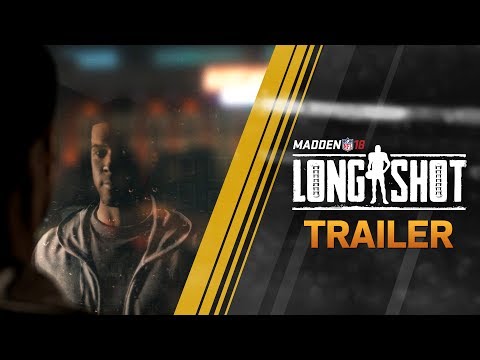 For more infomation >> Madden 18 - Longshot - Official Reveal Trailer - Duration: 1:09.



 For more infomation >> Breaking News , President Trump Latest News Today 6/10/17 , FBI James Comey Testifies Vs Trump - Duration: 30:16.


 For more infomation >> Escaping from the grandmother (roblox) // alange206 // - Duration: 12:29.


 For more infomation >> VW Golf - Duration: 1:09.
  For more infomation >> VW Golf - Duration: 0:57.
  For more infomation >> BMW 535 - Duration: 1:05.
  For more infomation >> VW Golf Sportsvan - Duration: 1:02.
  For more infomation >> Let's Get Serious - Jermaine & The Jacksons - Subtitulado en Español - Duration: 5:25.

 For more infomation >> BMW 5 Serie Touring 530d M Sport Edition - Duration: 1:01.
  For more infomation >> Suzuki VITARA 1.6 5D M/T LIMITED ALLGRIP - Duration: 1:08.
  For more infomation >> BMW 4 Serie Gran Coupé 435i High Executive Aut M Sportpakket (Sportleder/Individual/Memory Clima Na - Duration: 0:47.
  For more infomation >> Suzuki SWIFT 1.2 5D M/T CLUB - Duration: 1:11.
 For more infomation >> Il segreto del mio successo - Duration: 1:11.


Không có nhận xét nào:
Đăng nhận xét